
Bike Waikato June 2025 Newsletter
In this newsletter from Bike Waikato:
- Come to our Annual General Meeting! 12 July 2025 at the Hamilton Central Library
- Events Wrapup – Big Bike Film Night and Bike Valet Successes
- Lack of Cycling Infrastructure is a Matter of Life and Death – What have we been doing for the last few months?
- Fifth Year Running: Voting for Local Government – What You Need to Know
- Winter Riding: Staying Safe on Two Wheels
Come to our Annual General Meeting!
The sixth Annual General Meeting for Bike Waikato will be held at the Hamilton City Central Library on 12 July 2025 from 10.30am.
At our General Meeting, you will have the opportunity to hear about what we have achieved over the past year and elect a new Committee for the upcoming year.

Events Wrapup – Big Bike Film Night and Bike Valet Successes
A big shout out to our friends at the Big Bike Film Night for a fantastic show as they came to Hamilton. We look forward to seeing them again across the Waikato next year.
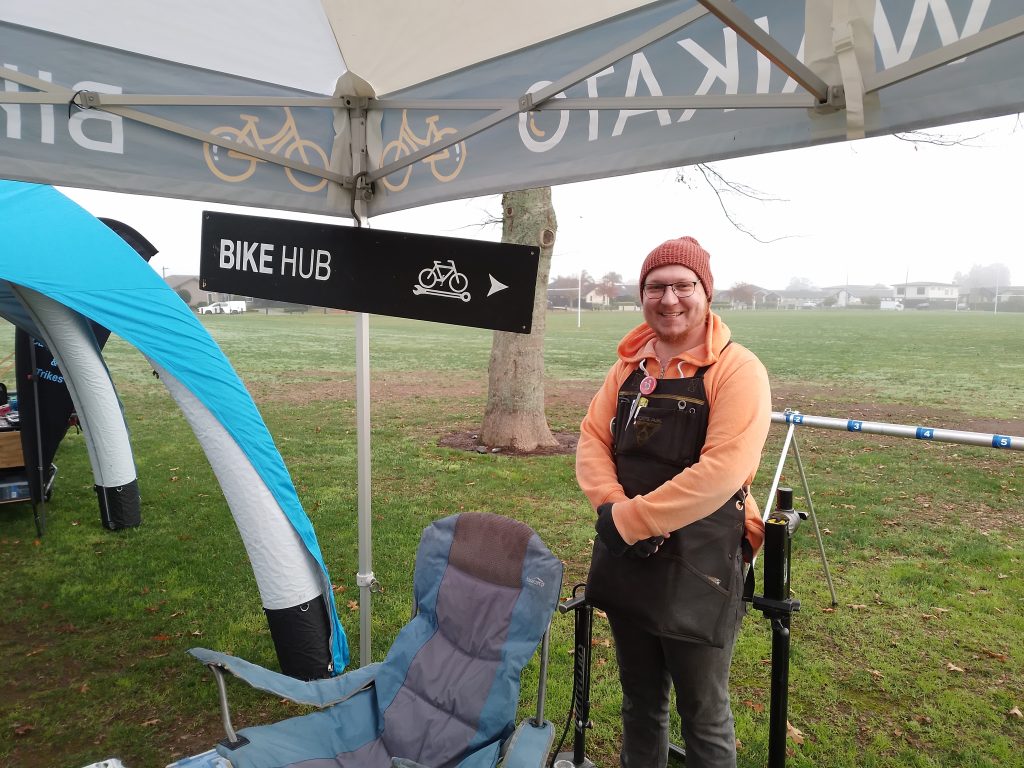
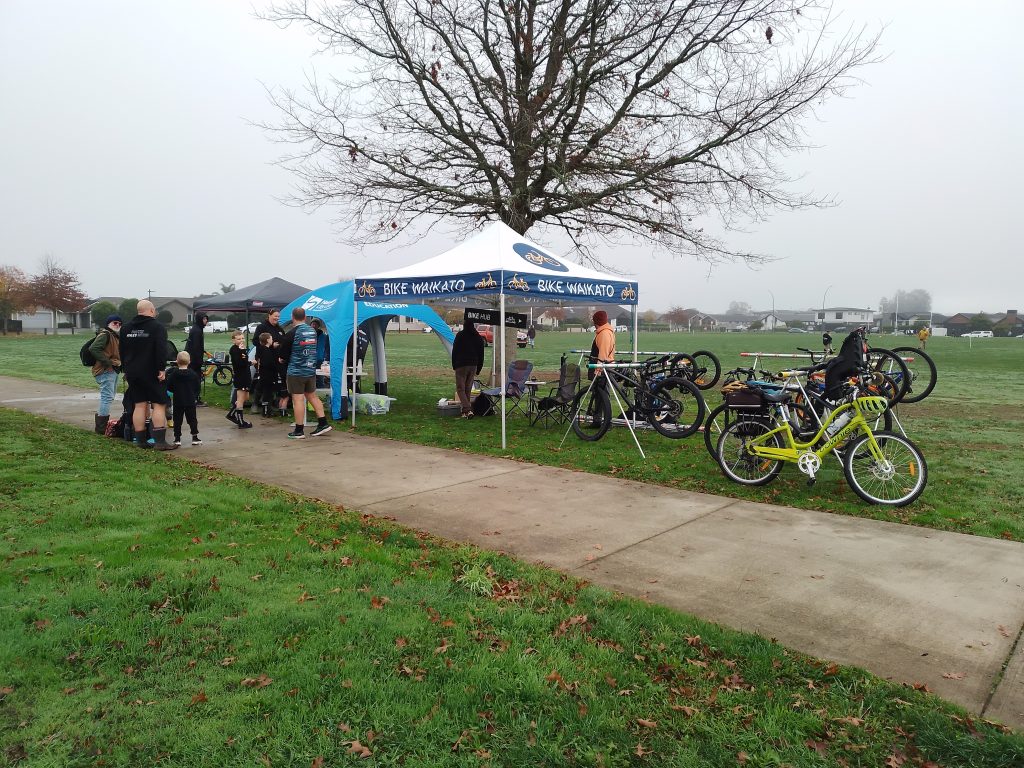
We have been busy with our Bike Valet over the last couple of months! We hosted two amazing Bike to Sports days in conjunction with the Hamilton City, having great conversations with the community as people biked in to play or support their team. We look forward to further collaborations to provide this service again in the future. Congratulations also to the Suburbs 8 White, Suburbs 6 Silver, and Hamilton East Tui teams who won the Ninja Valley Passes as part of the Bike to Sports prizes.
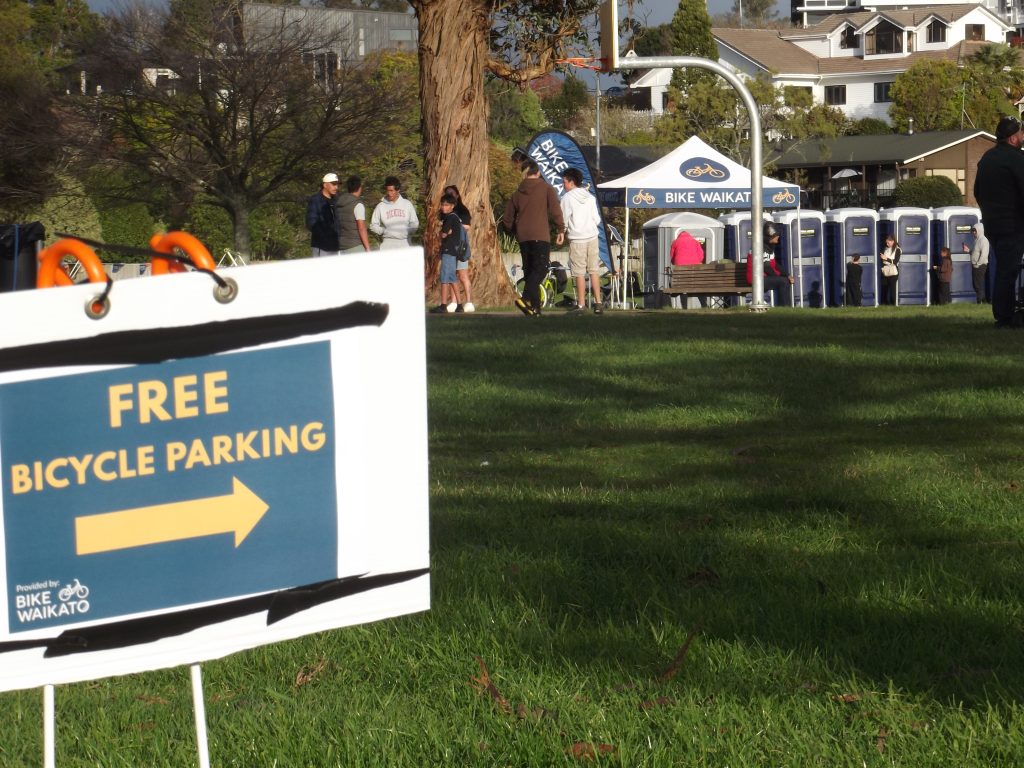
We also hosted the Bike Valet at the Matariki Celebration at Lake Rotoroa (Hamilton Domain Lake). It was great to celebrate the Māori New Year and reflect on the past year. We hope that you were able to connect with some of the meanings of the event, too.
Lack of Cycling Infrastructure is a Matter of Life and Death
Last month, we were shaken by the news of yet another life turned upside down for the simple act of riding a bike. A young woman was severely injured while biking to work when a truck driver ran them over at the intersection of Mill Street and Ulster Street.
During the same week, we learned the sentence of the truck driver who killed Jessica Moser less than a kilometer away at the intersection of Tristram Street and Norton Road in June 2022. Despite demonstrating that he cannot safely operate his vehicle, he was not disqualified from driving. He was given a fine, ordered to pay reparations to the family, and undertake community service.
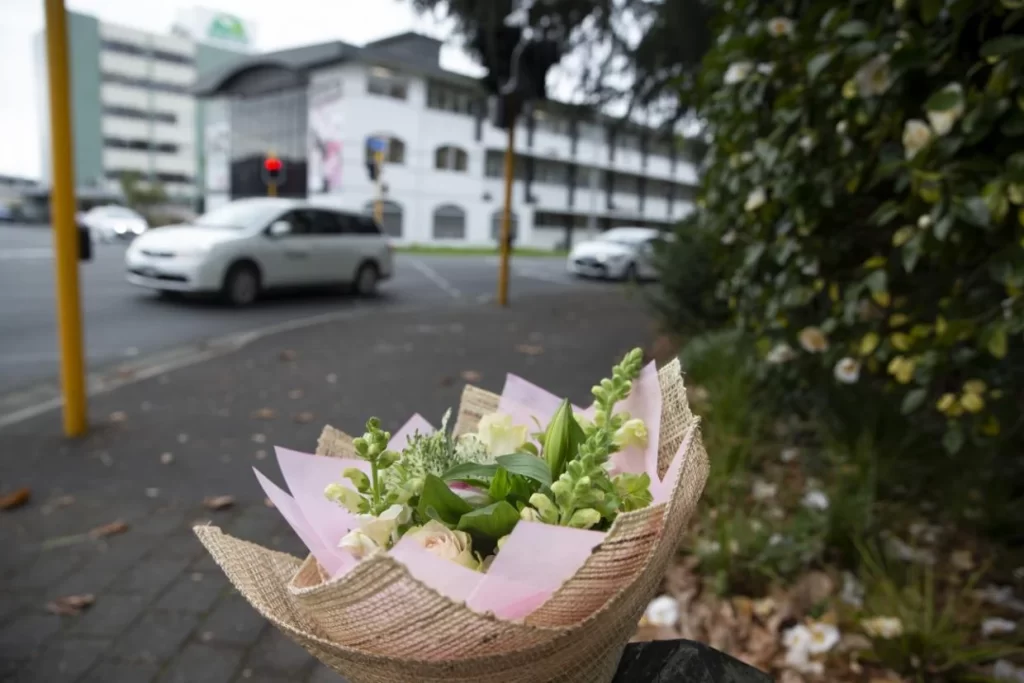
The judge determined that the lack of dedicated cycling infrastructure on this road was a significant factor in the death of the person riding a bicycle.
This is another devastating but critical reminder that investing in cycling infrastructure in Hamilton is not a “nice to have” but a matter of life and death. People are suffering life changing injuries and being killed just for getting around the city on a bicycle—and, as the judge in this case ruled, a lack of cycling infrastructure is compounding this issue.
So who is going to take responsibility for this?
In light of these events, we wrote to Hamilton City Council, our local Members of Parliament (Ryan Hamilton and the Hon Tama Potaka), and the Minister of Transport Chris Bishop highlighting this devastating and ongoing situation and urging for more direct action. We asked them: what will you do to improve safety for people riding bikes at these intersections in particular and in the city in general to prevent further injuries and deaths?
We heard back from the Minister and half of our Hamilton Councillors: Louise Hutt, Deputy Mayor Angela O’Leary, Maxine van Oosten, Sarah Thomson, Anna Casey-Cox, Maria Huata, Moko Tauariki, and Mayor Paula Southgate.
Our letters and their responses will be available on our website shortly.
Despite his Government slashing and reversing funding for road safety initiatives, Minister Bishop expressed continued “commitment” to improving road safety. He also sent us a link to the online Road Code to peruse guidance for “heavy vehicle drivers and cyclists”. Our view is that this response is lacking in real action.
The Councillors who responded to us expressed sympathy for this situation and outlined the funding situation for the next two years for improving cycling infrastructure. In particular, Councillor van Oosten requested information on trucks and the restrictions on their movements in the city, recognising that trucks have a disproportionate involvement in crashes in our city. We expect to hear more information in this space in due course.
We learned through our correspondence with Councillor Louise Hutt that the traffic bylaws for Hamilton City currently prohibit the driving of heavy vehicles on local, collector, or residential streets unless business is to be had (e.g., deliveries) specifically to addresses on those roads. Each instance of unlawful use of these roads can be met with a fine of up to $1000.
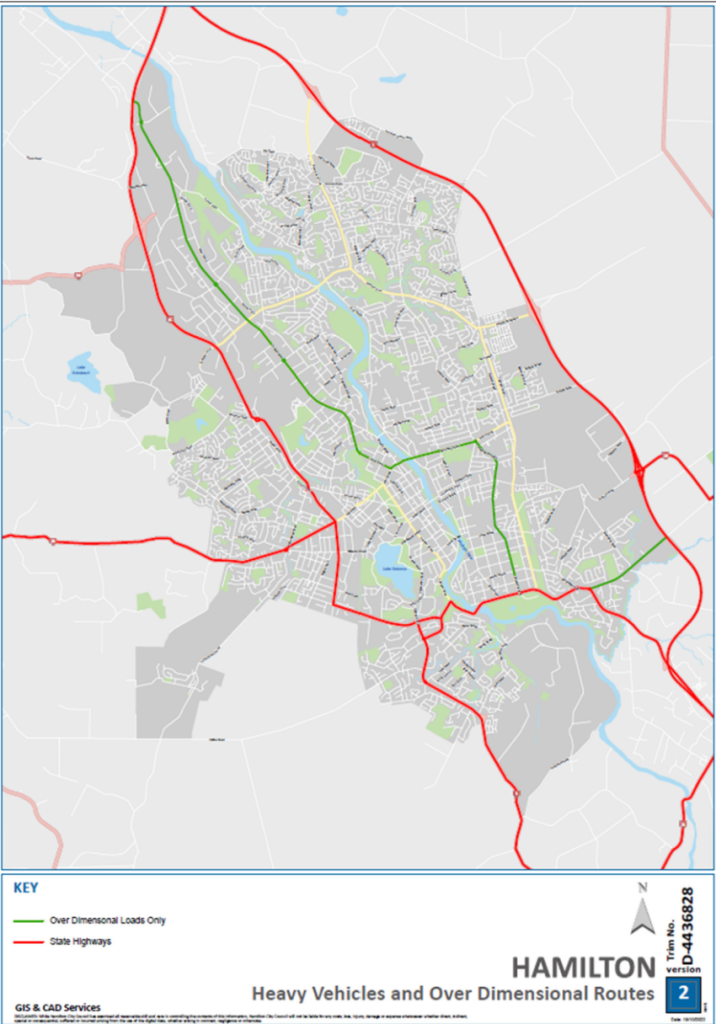
Did you even know about this? Do you think truck drivers know about this? This is certainly news for us.
The rules for heavy vehicles are outlined in Section 16 of the Hamilton Traffic Bylaw 2021.
However, there is no enforcement of this bylaw. There are no consequences for truck drivers or truck companies that drive unlawfully through local and arterial roads and endanger—and sometimes injure and kill—vulnerable road users.
We have heard debates in the public sphere about whether cycling infrastructure is really needed. In our view, this question has now been answered without a doubt. There are no more excuses for lack of actions, and we will be holding our decision makers accountable. We also want to see Hamilton City invest in actually enforcing the Traffic Bylaw and communicate to truck companies their responsibilities.
Our lives depend on it because cycling infrastructure is very much a matter of life and death.
Fifth Year Running! Vote for Local and Regional Council
The local elections are upon us once again!
Local elections are particularly important because it is city, district, and regional Councils that decide which infrastructure projects happen and when. That is why we encourage you all to get ready to vote in September/October.
Local election voting has always seen a lower voting turnout than our national elections. The gap between National and Local elections turnouts is almost double. Hamiltonians may be tired of voting, having had an election every year since 2016 between national and local elections and by-elections. In 2019, Hamilton reached the highest voter turnout since 2004—and despite the effort, it reached only 38%.
As we gear up for another election cycle we encourage everyone to research the candidates and learn what they will or will not support before making your preferential vote.
You can check out your local council website for more details how to enrol to vote or even stand:
- Hamilton City Council
- Matamata-Piako District
- Waikato District
- Waipa District
- Waitomo District
- Thames Coromandel District
- Hauraki District
- South Waikato District
- Taupo District
- Otorohonga District
- Waikato Region
To help you decide between the candidates, we want to know: What questions do you have for our local election candidates?
We will put these questions to the candidates and let you know what they say.

Winter Riding: Staying Safe on Two Wheels
As winter settles in, the familiar cycle of rain, ice, and often unpredictable drivers returns. But don’t let the colder months keep you off your bike entirely. With the right precautions, cycling can still be a safe and enjoyable way to get around your city or town—even in winter.

While road safety is a shared responsibility, cyclists can take proactive steps to stay safe. Just as drivers prepare their vehicles for winter, bikes need seasonal checks too. Start by inspecting your tires—good tread is essential for gripping slick or icy surfaces.
The Waikato is known for its heavy morning and evening fog. To stay visible, double up on front lights, use a rear light even during the day, and wear reflective clothing or gear. Route choice also matters—opt for quieter roads or bike paths with fewer hazards where possible.
And let’s not forget the other key variable—drivers. Winter weather amplifies existing road risks. Reduced visibility, longer stopping distances, and slippery surfaces can all make drivers less predictable. Unfortunately, many forget to adjust their driving style for the conditions. Cyclists should ride defensively: be aware of vehicle blind spots, avoid sudden movements, and, unfortunately, always assume you might not be seen.
In short, while winter riding presents a set of challenges, it doesn’t have to mean the end of your time on two wheels. With a bit of preparation, awareness, and the right gear, you can ride safely and confidently throughout winter.